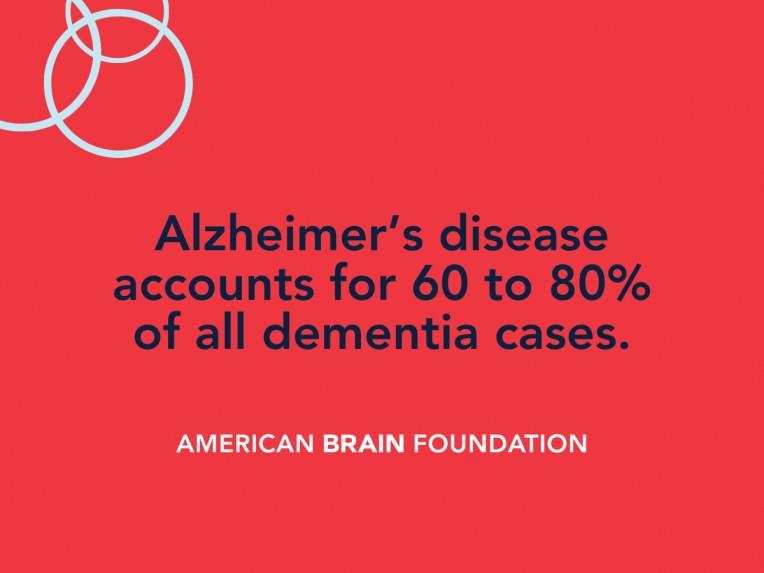
| The month of June is Alzheimer’s & Brain Awareness Month. According to American Brain Foundation, Alzheimer’s disease is an irreversible brain disease that affects memory, thinking, and the ability to complete daily tasks. Approximately 5 million people in the U.S. have Alzheimer’s disease.
Signs and Symptoms of Alzheimer’s Disease:
• memory loss beyond what is normal with aging, especially difficulty remembering new information or recent events
• repeating questions
• forgetting important dates
• problems with completing everyday tasks
• misplacing items
• trouble concentrating, problem-solving, or making decisions
As the condition progresses, people can become confused, irritable, and suspicious. They will gradually lose their independence and require an increasing level for care over time. Ultimately, they become fully dependent on others.
The Alzheimer’s Association breaks down Alzheimer’s into 3 stages – Early (mild), Middle (moderate) & Late (severe). The following are the common difficulties associated with each:
• Early (mild)
o Coming up with the right word or name
o Remembering names when introduced to new people
o Having difficulty performing tasks in social or work settings
o Forgetting material that was just read
o Losing or misplacing a valuable object
o Experiencing increased trouble with planning or organizing
• Middle (moderate)
o Being forgetful of events or personal history
o Feeling moody or withdrawn, especially in socially or mentally challenging situations
o Being unable to recall information about themselves like their address or telephone number, and the high school or college they attended
o Experiencing confusion about where they are or what day it is
o Requiring help choosing proper clothing for the season of the occasion.
o Having trouble controlling their bladder or bowels
o Experiencing changes in sleep patterns, such as sleeping during the day and becoming restless at night
o Showing an increased tendency to wander and become lost
o Demonstrating personality and behavioral changes, including suspiciousness and delusions or compulsive, repetitive behavior like hand-wringing or tissue shredding
• Late (severe)
o Require around-the-clock assistance with daily personal care
o Lose awareness of recent experiences as well as of their surroundings
o Have difficulty communicating
o Become vulnerable to infections, especially pneumonia
If you are looking for additional information or research, check out the Alzheimer’s Association or American Brain Foundation websites listed below.
|